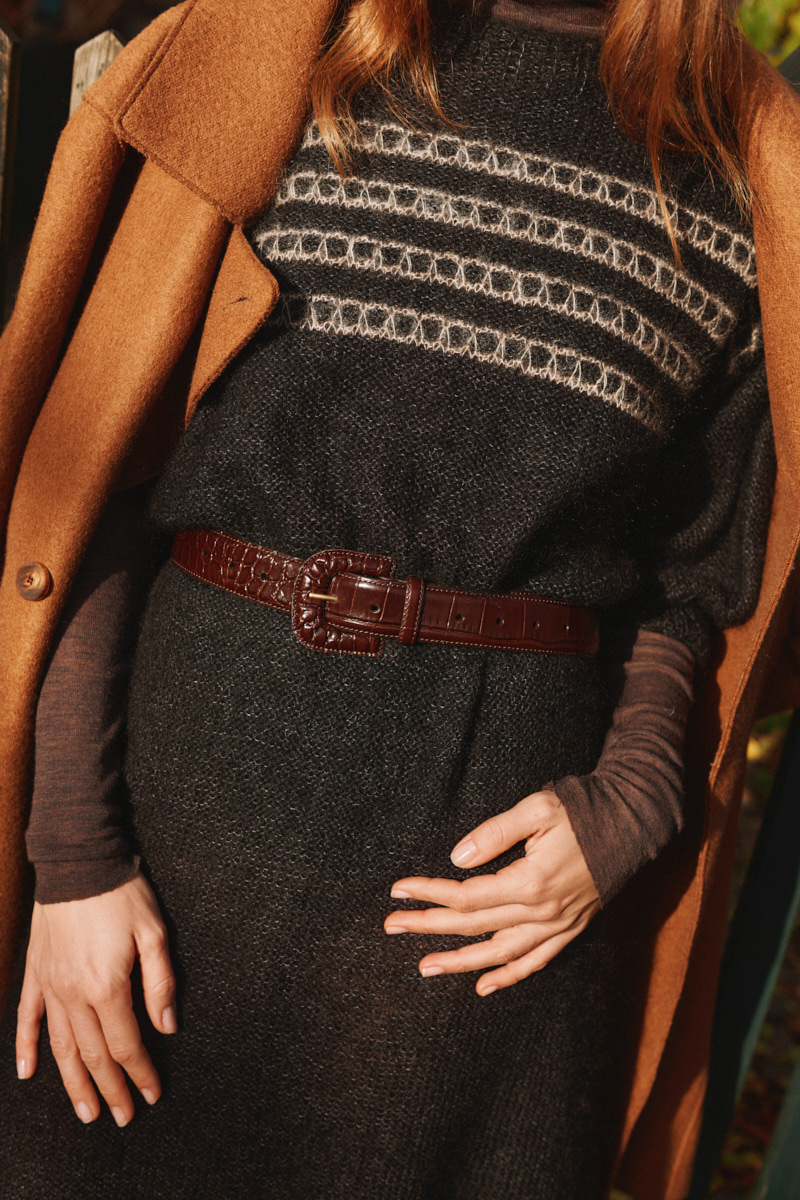
Part of the Isager Archives 2 collection
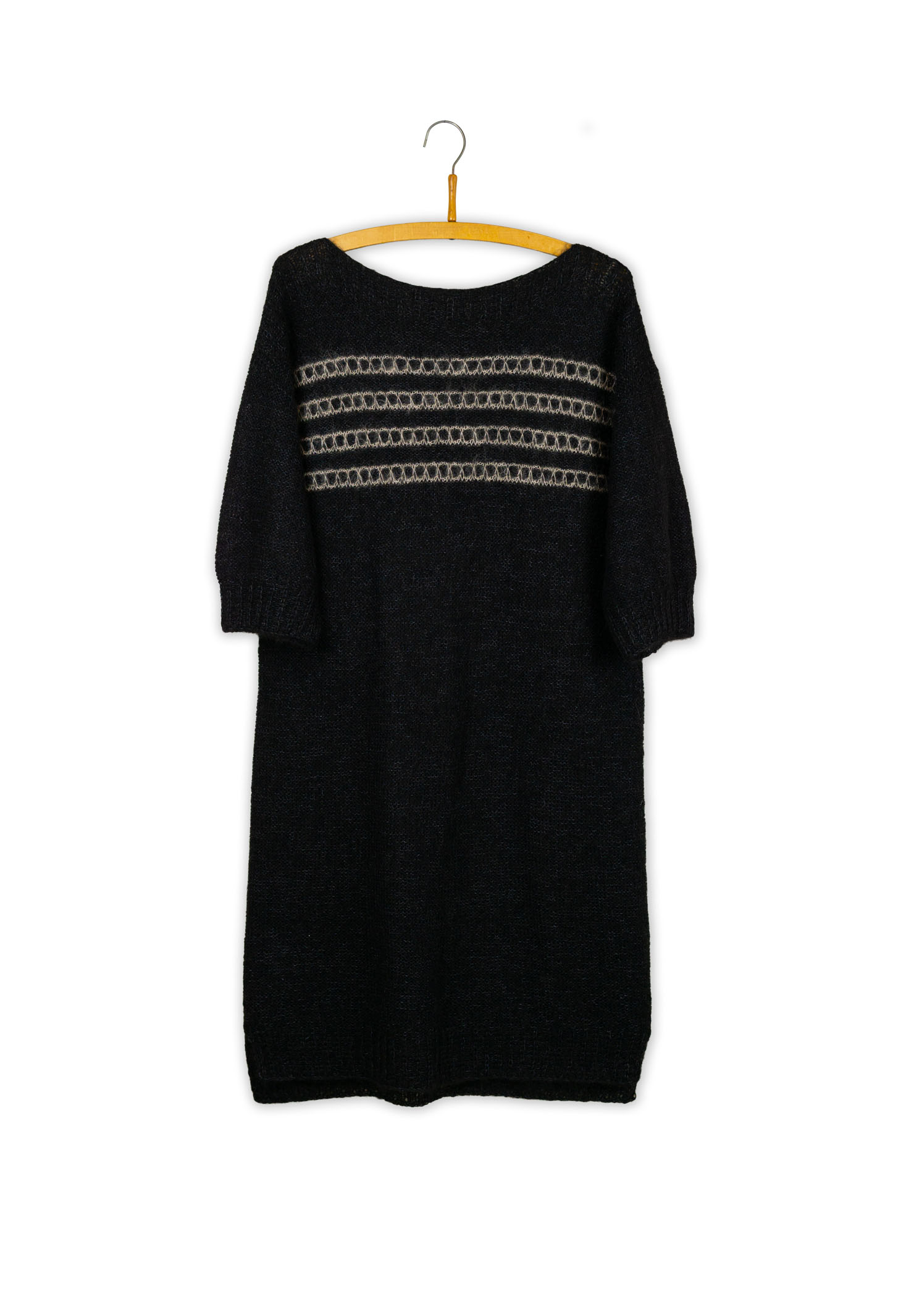
Lucia Dress
Dress
Design: Rikke Bangsgaard (Refined Knitwear)
Purchase pattern without yarn
-
External pattern
Buy pattern
Buy Yarn kit
Choose the size of your project
Customize your order
SIZES
XXS (XS) S (M) L (XL) 2XL (3XL) 4XL
MEASUREMENTS
Bust circumference: approx. 112 (115) 119 (125) 128 (132) 138 (141) 148 cm
Body length measured from the center back neck: approx. 92 (93) 95 (97) 98 (99) 100 (100) 100 cm
Sleeve length measured from where sleeves are attached: approx. 26 (26) 27 (27) 27 (27) 27 (27) 27 cm
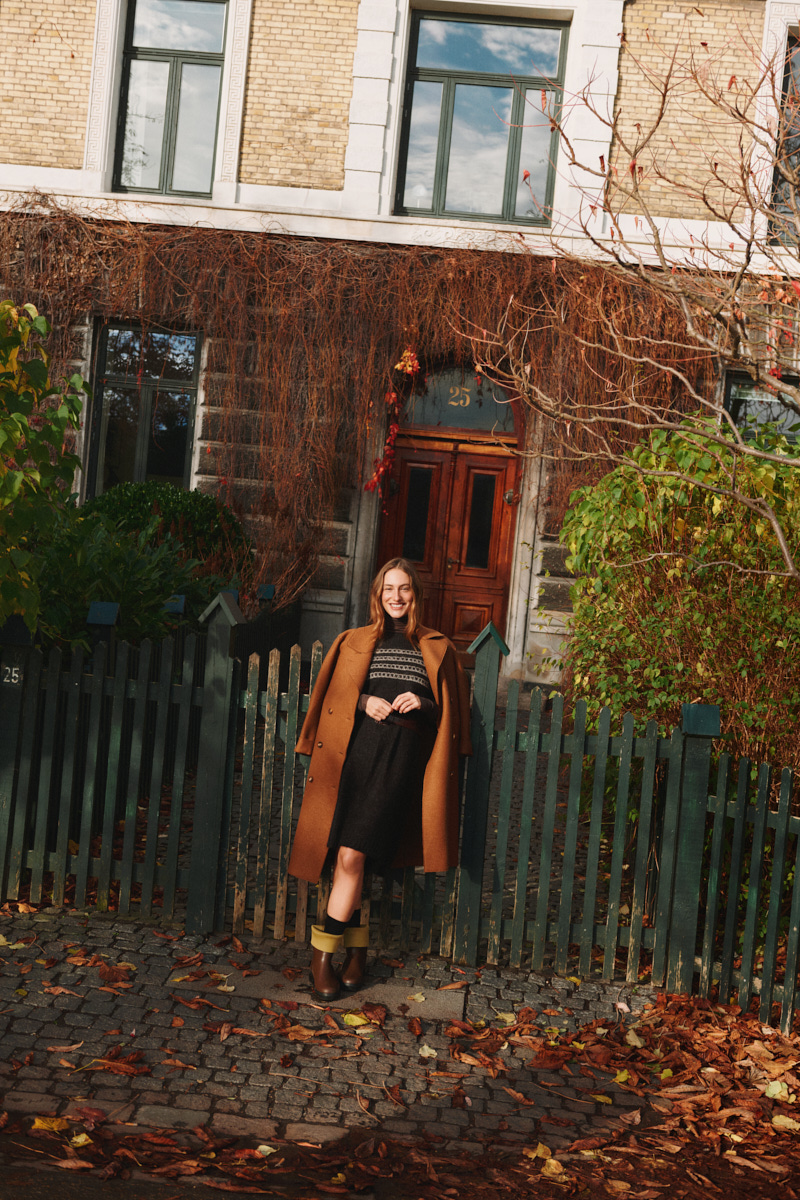
The dress is designed with 15–30 cm of positive ease. The dress version is intended to cover the knee. Sleeves are designed for a ¾ length. The piece is knitted top-down, making it easy to adjust both body and sleeve length to your preference.
The model in the photos has a bust measurement of approximately 84 cm and wears size XS with about 31 cm of ease. It is recommended to aim for more ease in the smaller sizes and less in the larger sizes.
YARN
Main colour:
200 (200) 200 (200) 250 (250) 250 (300) 300 g Isager Trio 1 col. Ink
150 (150) 175 (175) 175 (200) 225 (225) 250 g Isager Silk Mohair col. 30
The two strands are held together
Pattern colour:
25 g Isager Silk Mohair col. 6 RMS
You will also need 2 removable stitch markers (safety-pin type).
Garnalternativ
Main colour:
200 (200) 250 (250) 300 (300) 300 (350) 350 g Spinni
150 (150) 175 (175) 175 (200) 225 (225) 250 g Isager Silk Mohair
The two strands are held together
Pattern colour:
25 g Isager Silk Mohair
CONSTRUCTION
Rikke Bangsgaard (Refined Knitwear) writes about the construction:
Begin by casting on stitches for the front piece using a standard long-tail cast-on. The front piece starts with the edge that runs across the shoulders and neckline. Then switch to stockinette stitch while beginning the shaping of the shoulders and neckline using short rows. When both the shoulders and neckline have been shaped, continue knitting back and forth in stockinette stitch for a few rows before switching to a circular needle one size smaller than the one used for the rest of the project, and begin the slip-stitch pattern for the front yoke. When the slip-stitch pattern is complete, break the yarn and place the front stitches on hold.
Next, pick up stitches along the shoulder seams for the back piece. Between picking up stitches in the right and left shoulder seam, cast on stitches for the part of the neckline that runs along the back of the neck — I recommend the slip-knot cast-on, but a backward loop cast-on may also be used. The back piece begins the same way as the front: knit the edge first, then switch to stockinette stitch and shape the shoulders using short rows. Continue knitting back and forth in stockinette stitch after shaping, until the back piece matches the length of the front piece. Join the front and back from the wrong side and knit the body in the round in stockinette stitch (knit). Before working the final edges on the body, divide the work again into front and back to knit the edges separately, creating slits on each side. First, work the front edge. Next, knit the finishing edge of the back piece. Before doing so, pick up a few stitches along the edge of the front piece on each side. This makes the back piece’s edge slightly wider, allowing the front piece to overlap it and stabilizing the slits, and giving them a neat finish. Bind off using a standard bind-off.
Pick up stitches along the armholes for the sleeves. Because the sleeves need to be knitted in the round in stockinette stitch (only knit stitches) from the wrong side, pick up stitches from the right side, but using the yarn tail! Shape the sleeve cap using short rows before knitting in the round. Decrease stitches before working the final edge, which is finished with a standard bind-off.
It is recommended to stabilize the neckline with a round of single crochet stitches and to knit an I-Cord tie.
RECOMMENDED NEEDLES
Circular needle 4 mm (80 cm)
Circular needle 3 mm (80 cm)
If you decide to crochet single crochet stitches around the neckline, you will need a 3 mm crochet hook.
If you want a tie for the dress, you will need two 3 mm double-pointed needles.
The Magic Loop method is recommended for knitting the sleeves and sleeve borders. If you do not use Magic Loop, you will also need a 4 mm circular needle (40 cm).
GAUGE
18/19 sts × 27 rows = 10 × 10 cm on 4 mm needles in Stockinette stitch (flat and in the round)
18/19 sts × 37 rows = 10 × 10 cm on 3 mm needles in Slip-stitch colorwork (flat)
BUY PATTERN
The pattern can be purchased on Rikke Bangsgaard (Refined Knitwear)’s website
Buy the pattern HERE
The pattern also includes instructions for the Lucia Blouse
Find the yarn kit for the dress HERE
ABOUT THE DESIGNER'S INSPIRATION AND DESIGN PROCESS
Rikke Bangsgaard (Refined Knitwear) writes about the design:
“I’m inspired by two of Marianne Isager’s designs from the 1980s and 1990s: Blommetræer and Netværk.
Blommetræer features a square shape and an edge that continues across the shoulders and neckline – a construction that captures the essence of the knitting style of that era and reminds me of the first sweater I ever knitted as a child. When I rediscovered Blommetræer, I knew its shape and edges had to be the foundation of my design.
For the yoke, I was looking for a delicate pattern that could be worked back and forth – so it was an obvious choice to draw inspiration from Netværk, with its beautiful, airy slip-stitch texture.
I chose Isager Silk Mohair, a yarn that appears in many of my designs, combined with Isager Trio 1, which adds structure and stability. Together, they create a fabric that drapes beautifully around the body – perfect for a square construction like this.
I have a deep affection for this design. To me, it combines elements of Marianne’s work with the feminine, light aesthetic that defines my universe. I hope this piece helps affirm that knitting can just as well be dresses and delicate blouses.”
ABOUT ISAGER ARCHIVES 2 - COLLECTION
This collection is inspired by Marianne Isagers many designs from the 80s and 90s. 15 of Denmark’s most talented knitwear designers have spent a weekend with us in Tversted, with access to Marianne’s substantial collection of patterns. The designers have used one or more patterns as inspiration for their respective contributions to the Isager Archives 2 collection.
See the entire collection HERE